
What Is Mad Honey?
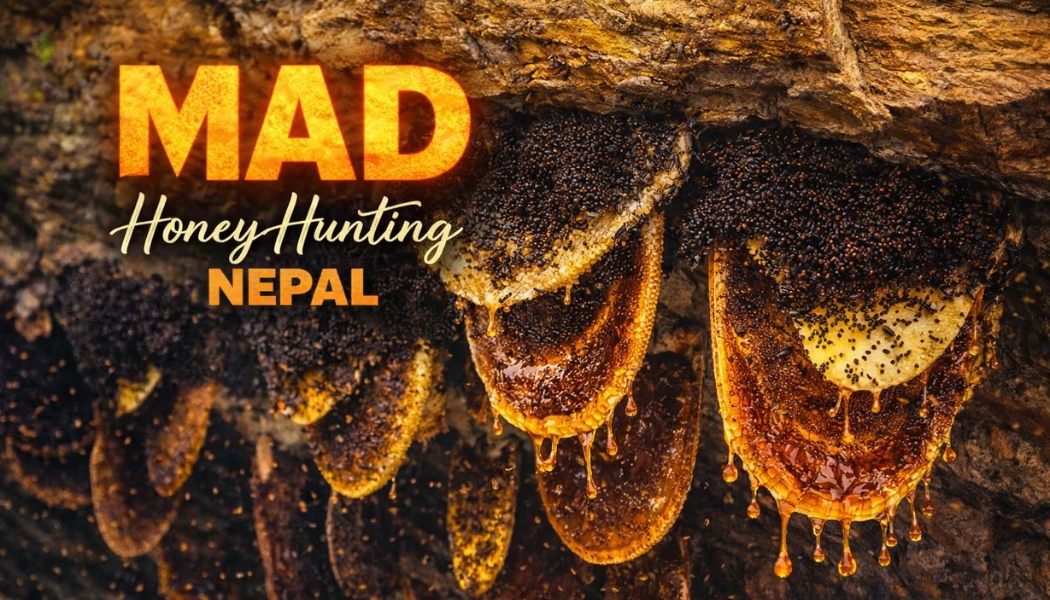
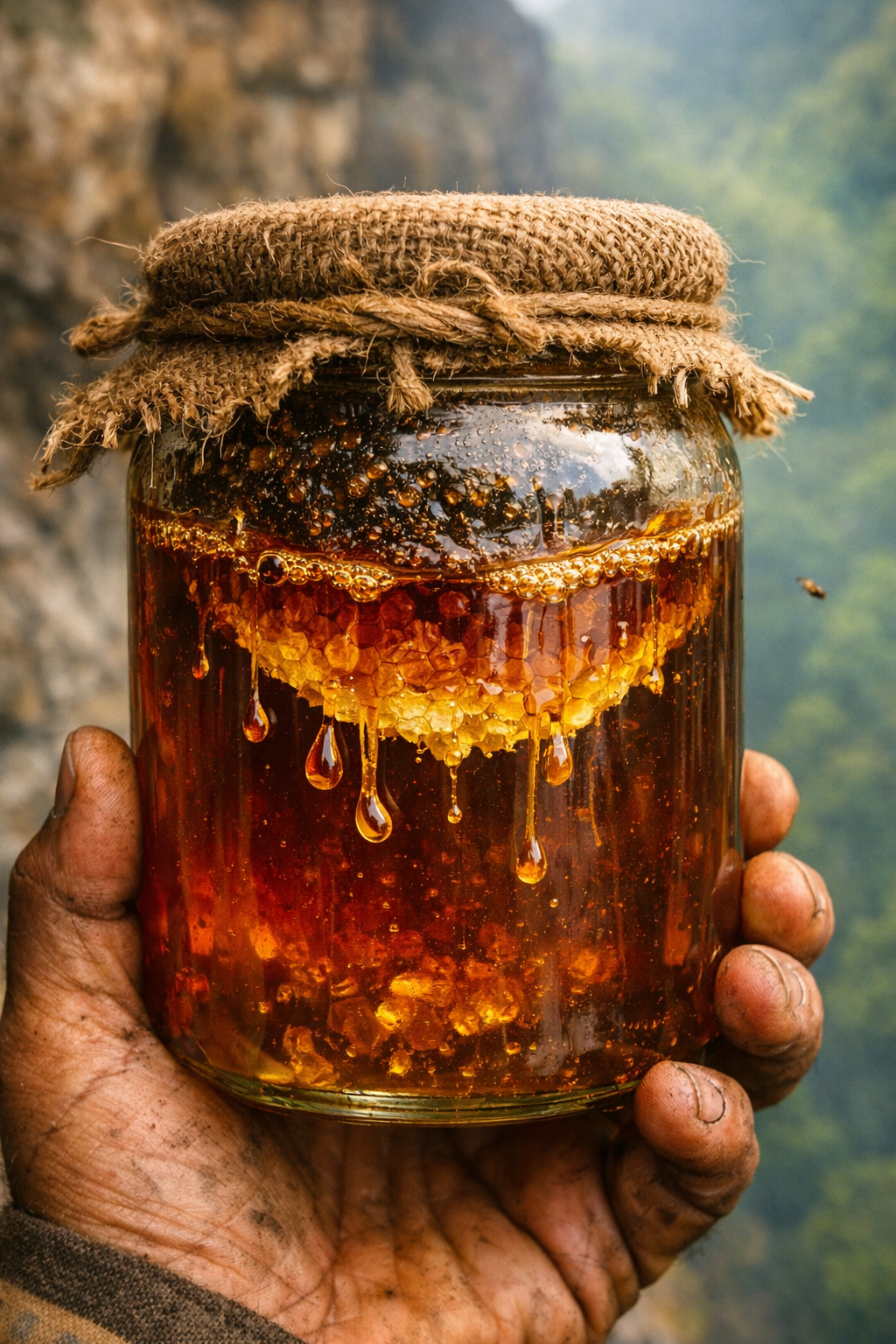
Mad honey is a rare type of wild honey produced by the giant Himalayan honeybee,Apis Laboriosa. These bees collect nectar from rhododendron flowers found in Nepal’s high altitude forests. The nectar contains natural compounds called grayanotoxins, which give the honey its famous psychoactive and medicinal properties.
Unlike ordinary honey, mad honey can cause mild hallucinations, dizziness, relaxation, and warmth when consumed in small quantities. Local communities have traditionally used it for medicinal purposes, including treating high blood pressure, body pain, digestive problems, and fatigue.
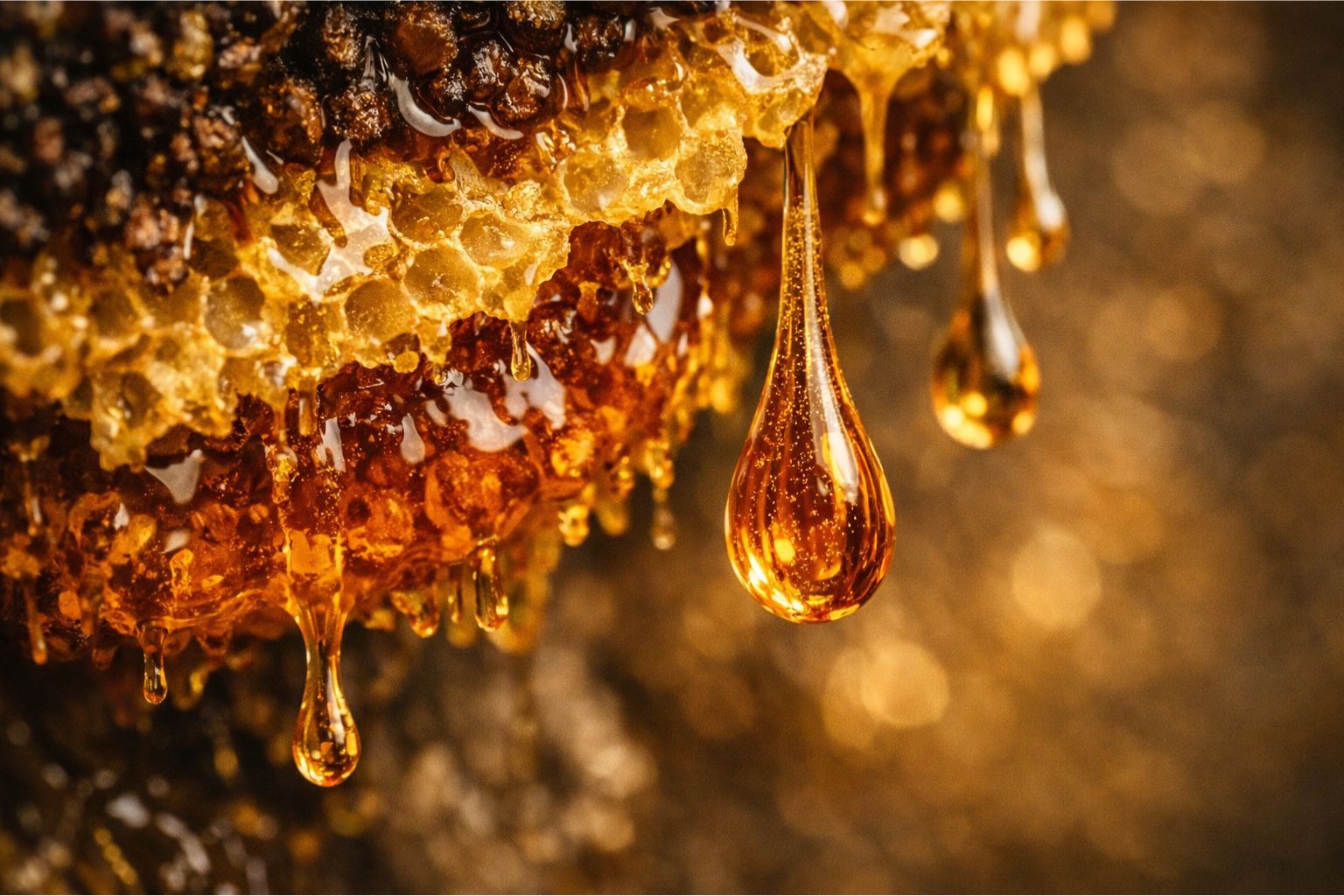
The deep reddish color and unique bitter sweet taste make Himalayan Cliff Honey one of the rarest and most expensive natural products in the world.
The Ancient Tradition of Gurung Honey Hunters
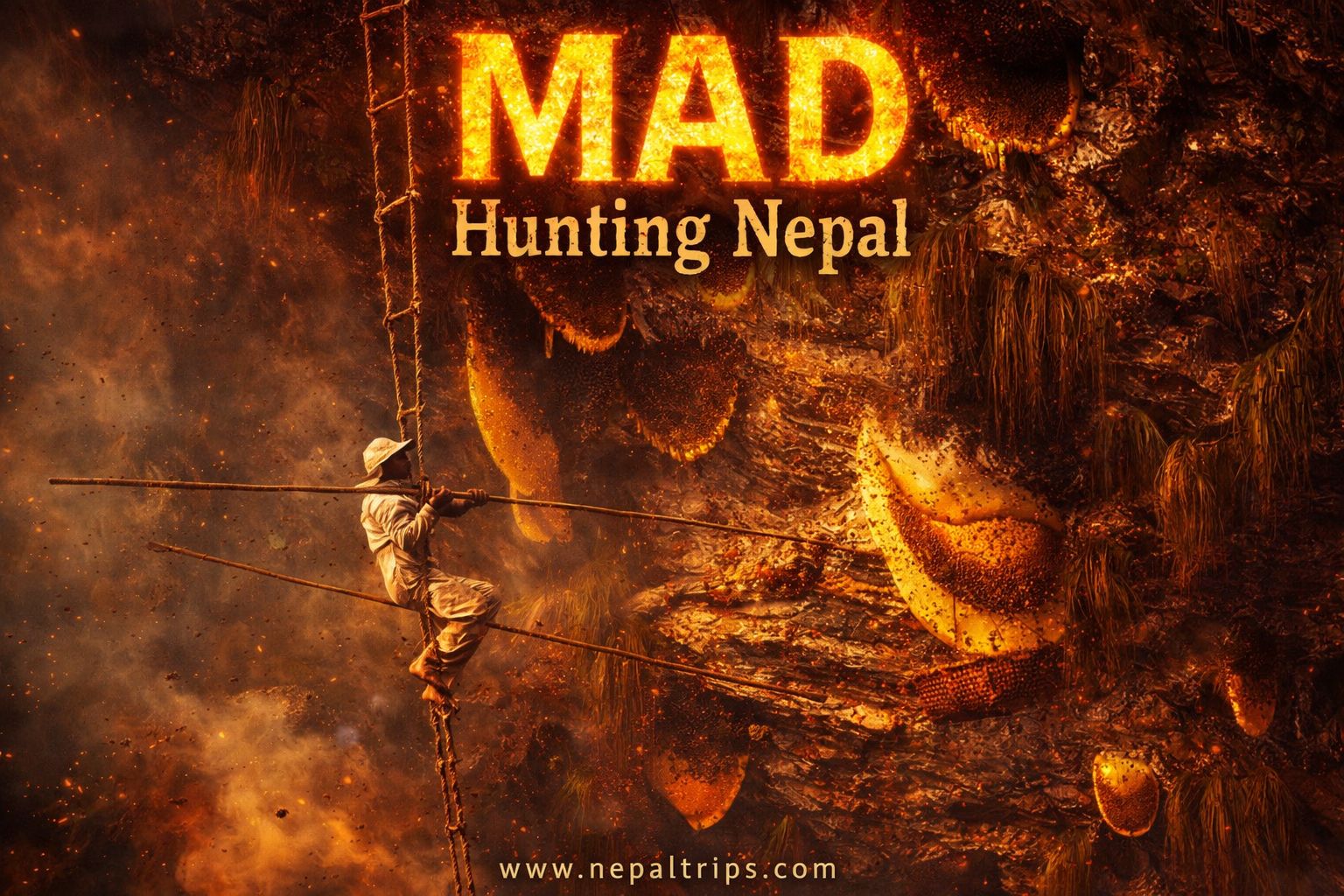
The tradition of honey hunting is strongly connected to the Gurung communities of central Nepal. These fearless Gurung Honey Hunters risk their lives every season by descending steep cliffs that can rise more than 300 feet above the ground.
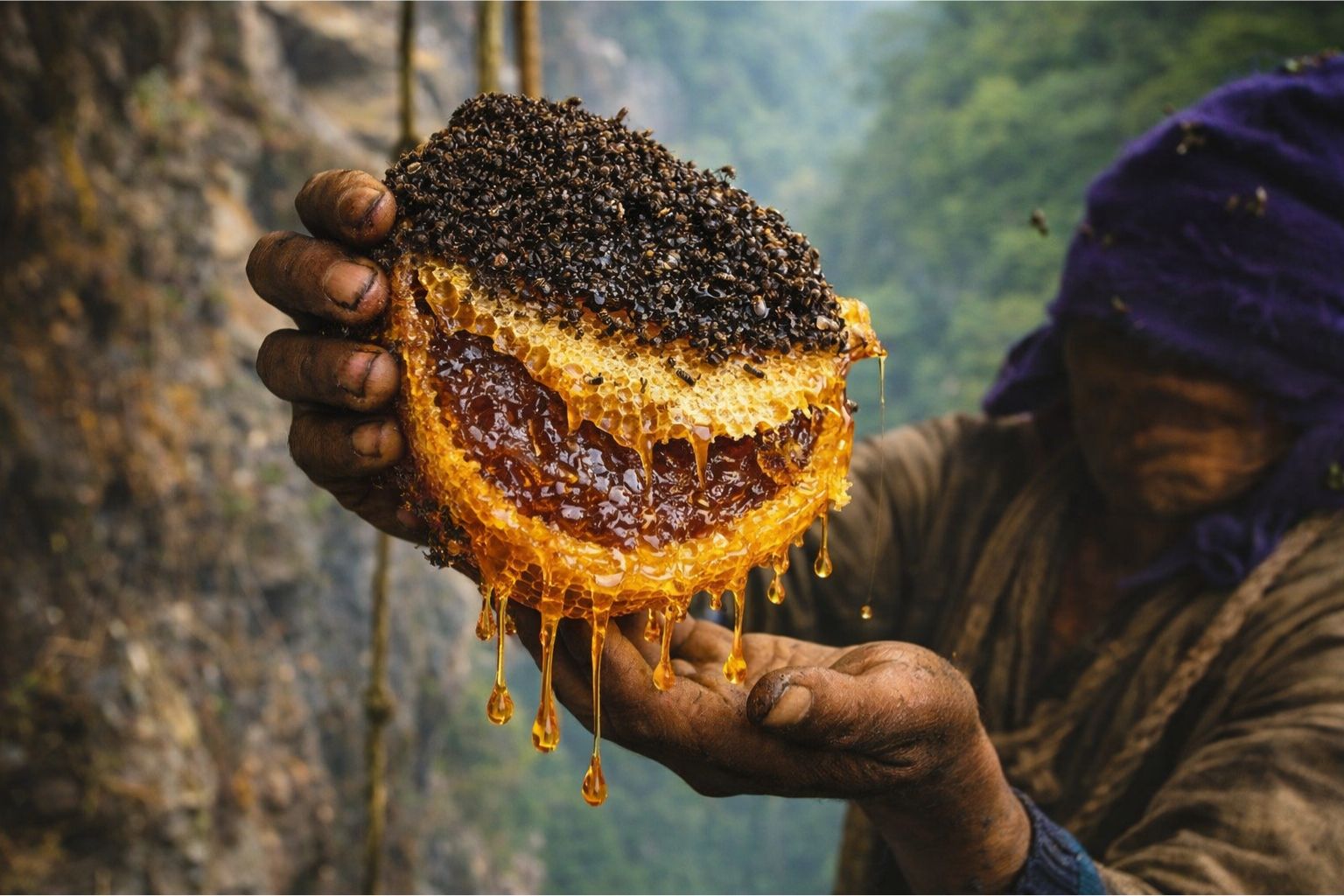
Armed with smoke torches, woven baskets, and ropes, the hunters carefully calm the aggressive bees before cutting down massive honeycombs hanging from vertical rock faces. The process requires incredible teamwork, courage, and experience.
Honey hunting is more than just harvesting honey it is a sacred cultural ritual. Before beginning the hunt, many communities perform prayers and offerings to mountain spirits and nature gods for protection and success. This spiritual connection between humans and nature remains an important part of rural life in Nepal.
Best Places for Mad Honey Hunting in Nepal
Lamjung – The Heart of Mad Honey Hunting
Lamjung is one of the most famous destinations for witnessing authentic honey hunting traditions. The remote villages surrounding the Annapurna region are home to experienced honey hunters who continue practicing this ancient craft.
The dramatic landscapes, traditional Gurung culture, and seasonal honey harvesting make Lamjung Mad Honey tours especially popular among adventure travelers. Spring and autumn are the best seasons to visit.
Myagdi – Wild Cliffs and Remote Villages
Myagdi offers another incredible opportunity to experience Myagdi Mad Honey expeditions. Located near the Dhaulagiri region, Myagdi is known for its steep cliffs, untouched forests, and isolated mountain communities.
Travelers visiting Myagdi can combine honey hunting experiences with trekking, village homestays, and Himalayan photography adventures.
Kaski – Gateway to Adventure
Kaski, home to the beautiful city of Pokhara, also features honey hunting villages in its hill regions. The area provides easier access for travelers interested in combining cultural exploration with trekking and nature tourism.
Gorkha – Cultural and Historical Significance
Gorkha is another important region where traditional honey hunting can still be observed. Rich in history and Gurung heritage, Gorkha offers visitors a deeper understanding of Nepal’s mountain culture and indigenous traditions.
Why Mad Honey Hunting Matters
Mad honey hunting represents a unique connection between humans, nature, and survival. In modern times, this ancient practice faces challenges from climate change, migration, and declining bee populations. Responsible tourism can help preserve these traditions while supporting local communities economically.
As interest in experiential travel grows, Nepal Adventure Tourism continues to highlight authentic cultural experiences like honey hunting, allowing visitors to witness traditions that exist nowhere else in the world.
Experience Nepal’s Living Heritage
From the cliffs of Lamjung to the remote valleys of Myagdi, mad honey hunting offers an unforgettable glimpse into Nepal’s living heritage. Watching the brave Gurung Honey Hunters scale towering cliffs in search of rare Himalayan Cliff Honey is both thrilling and deeply inspiring.
If you are seeking a truly unique adventure beyond ordinary trekking routes, explore the ancient tradition of Mad Honey Hunting Nepal and discover the wild spirit of the Himalayas.