

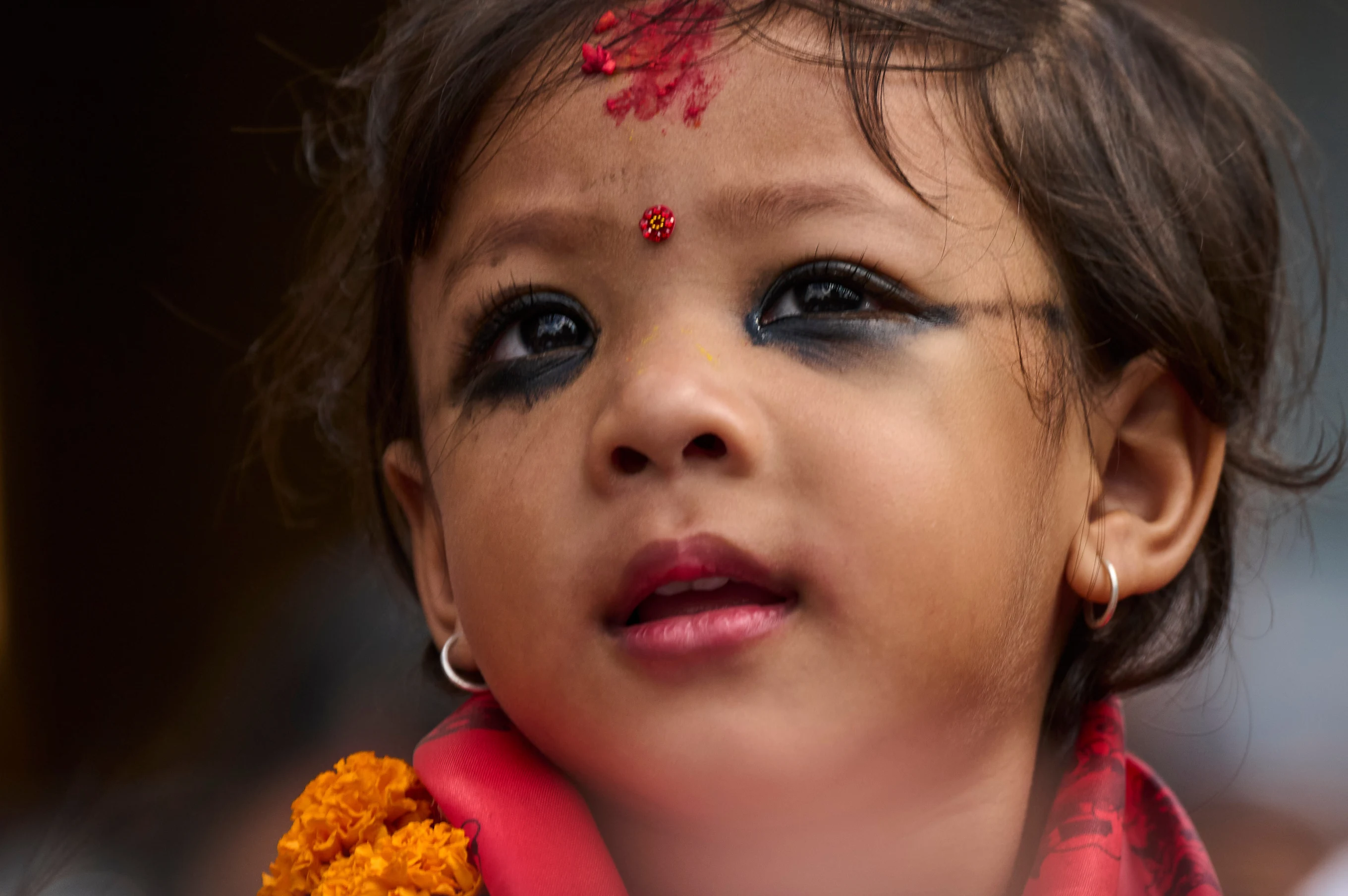
In the bustling heart of Kathmandu Durbar Square, a young girl is worshipped as a living goddess. Known as the Kumari (meaning "young girl" or "virgin" in Sanskrit), she is revered as the earthly incarnation of the powerful Hindu goddess Taleju Bhawani (a form of Durga or Shakti). This unique Newari tradition is followed by both Hindus and Buddhists in Nepal and remains one of the most intriguing living cultural heritages in the world.
If you’re planning a trip to Nepal or simply curious about ancient traditions, here’s everything you need to know about the Kumari Living Goddess, including her selection process, daily rituals, the current Royal Kumari in 2026, and how to visit her.
The Legend and History of the Kumari Tradition
The origins of the Kumari date back to the Malla Dynasty (13th–18th century). Legend says the goddess Taleju appeared to the king in human form every night to offer counsel. When the king’s curiosity or improper behavior offended her, the goddess disappeared, promising never to return in that form.
To continue receiving divine protection for the kingdom, she instructed the king to worship a pure prepubescent girl from the Shakya clan (Newar Buddhist goldsmith community) as her vessel. The tradition was formalized in the 17th century and has survived political upheavals, including the abolition of the monarchy.
Today, several Kumaris serve in the Kathmandu Valley (including in Patan and Bhaktapur), but the Royal Kumari of Kathmandu holds the highest status. She resides in the historic Kumari Ghar (Kumari Palace) at Basantapur, right in Kathmandu Durbar Square, a UNESCO World Heritage Site.
How Is the Kumari Chosen? The Rigorous Selection Process
Selecting a Kumari is a secretive, tantric ritual guided by astrology, priests, and strict criteria. Candidates are typically girls aged 2 to 4 years from the Shakya clan.
Key eligibility requirements include:
32 physical perfections (Battis Lakshanas): Flawless skin with no scars, dark cow-like eyes, lion-like eyelashes, a conch-shaped neck, soft duck-like voice, and many other symbolic traits.
Perfect health, all baby teeth intact, and no history of bleeding or serious illness.
Astrological compatibility (horoscope matching with the nation or former king).
Demonstrated fearlessness and spiritual purity.
The final test occurs during the Kalratri night of the Dashain festival. Young candidates are taken to a darkened room filled with buffalo heads, sacrificed animal remains, and terrifying masks. The girl who remains calm and composed—without crying—is believed to be possessed by the goddess. Senior Bajracharya priests and astrologers make the final decision.
Once selected, the girl undergoes purification rituals and moves into Kumari Ghar, where she lives until she reaches puberty or menstruates. At that point, the goddess is said to leave her body, and a new Kumari is chosen.
Daily Life and Rituals of the Living Goddess
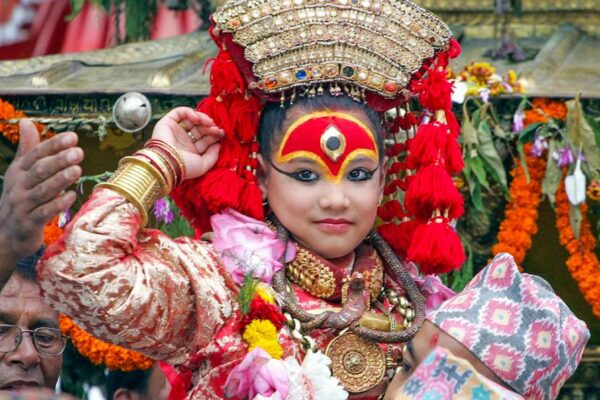
The Kumari’s life is highly ritualized. She wears red clothing (symbolizing power), heavy traditional makeup, a painted “third eye,” and her hair in topknots. She sits on a throne-like seat for several hours daily, granting blessings (darshan) to devotees who seek good fortune, health, or protection. Even a simple glance or gesture from her is interpreted as an auspicious sign.
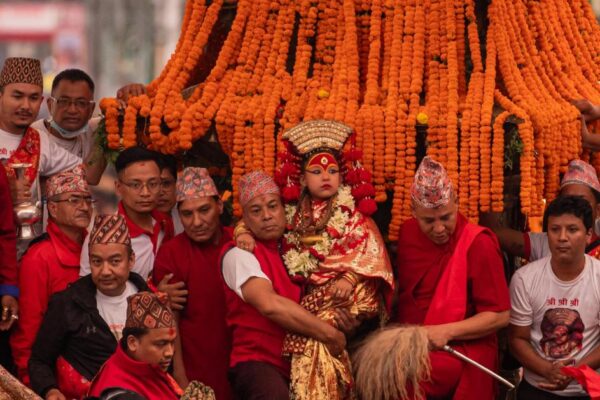
Her routine includes daily pujas (worship), a strict vegetarian diet, and limited outings. Traditionally, her feet do not touch the ground outside sacred spaces. She appears publicly during major festivals, most famously Indra Jatra (August/September), when she is paraded through the streets in a chariot, blessing the nation.
Who Is the Current Kumari in 2026?
As of 2026, the Royal Kumari of Kathmandu is Aryatara Shakya. She was selected in September 2025 at the age of just 2 years and 8 months, succeeding Trishna Shakya (who served from 2017 to 2025). Aryatara belongs to the Shakya community of Itumbahal and now resides in Kumari Ghar.
Other Kumaris continue to serve in Patan (Lalitpur) and Bhaktapur, maintaining the tradition across the valley.
Life After Being a Kumari: Challenges and Reforms
Retiring from the role brings a dramatic shift—from divine status to ordinary life. Many former Kumaris describe difficulties readjusting: relearning to walk normally (after years of being carried), socializing, and catching up on education.
In the past, superstitions (such as the belief that a man marrying an ex-Kumari would die young) created social challenges. Modern reforms have improved the situation significantly. Former Kumaris now receive government stipends, compulsory education (often with private tutors during their tenure), and better support for reintegration. Many have gone on to pursue higher studies, careers, and marriage.
Critics raise concerns about the psychological impact of isolation on a child, while supporters emphasize the cultural honor and prestige it brings to the family and nation. The tradition continues to evolve with court rulings and societal changes.
How to Visit Kumari Ghar in Kathmandu (2026 Practical Guide)
Visiting the Living Goddess is a highlight for many travelers to Nepal. Kumari Ghar is located in Basantapur Durbar Square, within walking distance of other major temples and palaces.
Best times to see the Kumari in 2026:
Morning session: 11:00 AM – 12:00 PM
Afternoon session: 3:00 PM – 4:00 PM (or 3:30 PM – 4:30 PM)
Note: Timings can vary slightly depending on rituals or festivals. She appears briefly at a window or balcony—be respectful and patient.
Visitor Tips:
Dress modestly and maintain silence.
Photography or videography of the Kumari is strictly prohibited.
Entry to Durbar Square costs approximately NPR 1,000 for foreigners (includes access to the square where Kumari Ghar is located).
Combine your visit with a full exploration of Kathmandu Durbar Square, Thamel, or a guided cultural tour.
The most spectacular experience is during Indra Jatra or other festivals when the Kumari processes through the streets.
You can also visit Kumaris in Patan Durbar Square for a less crowded experience.
Why the Kumari Tradition Still Matters Today
The Kumari Living Goddess represents the powerful syncretic blend of Hinduism and Buddhism unique to Nepal. She embodies divine feminine energy (Shakti), purity, and protection in a tangible form. In a rapidly modernizing world, this ancient practice continues to draw devotees, researchers, and tourists, reminding us of humanity’s enduring connection between the sacred and the everyday.
Whether you view it through the lens of faith, anthropology, or cultural preservation, the story of Nepal’s Kumari is unforgettable.
Planning a trip to Nepal? Experiencing the aura around Kumari Ghar—amid ancient temples and vibrant city life—is a profound moment that blends myth, history, and living culture.
Note: Details such as exact timings and entry fees may change. Always check with local guides or official tourism sources before visiting. Respect the tradition and the child’s dignity at all times.
