

Introduction
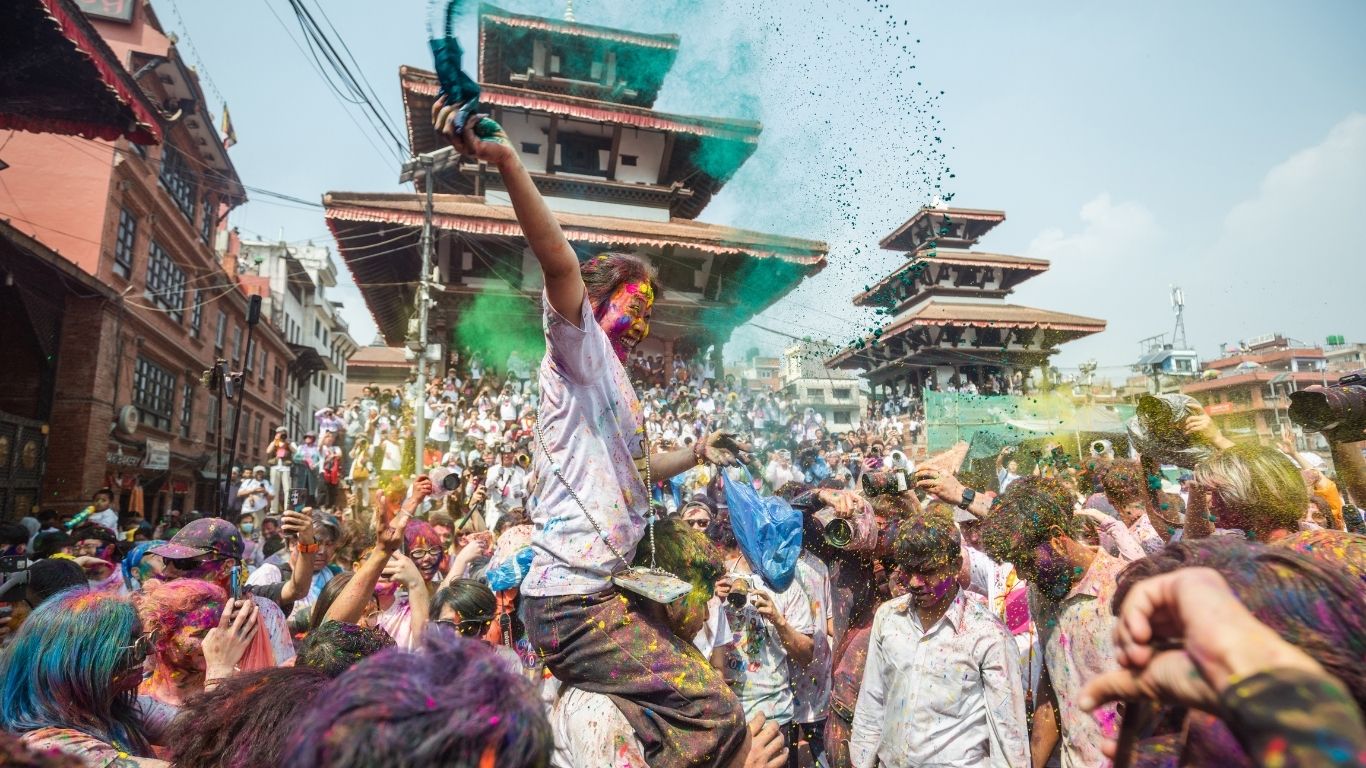
There are festivals, and then there is Holi in Nepal. As powdered pigments explode into vivid clouds of saffron, rose-pink, sky-blue, and forest-green, the streets of Kathmandu transform into a living canvas, a celebration so visceral, so joyful, that every traveller who experiences it leaves a little more alive.
Known locally as Fagu Purnima, Holi marks the triumph of good over evil and the glorious arrival of spring. In Nepal it is more than a holiday, it is a two-day cultural phenomenon that sweeps across the Kathmandu Valley, the hill towns, and the Terai plains with equal ferocity.
What Is Holi & Why Celebrate It in Nepal?
Holi commemorates the Hindu legend of Holika and Prahlad a story of devotion, fire, and divine protection. On the eve of Holi, communities gather around enormous bonfires (Holika Dahan), chanting prayers and burning away the old year's negativity. Come morning, the real spectacle begins.
Nepal's version of Holi carries a distinctive Nepali character. The festival blends Hindu spirituality with Newar cultural traditions, especially in the ancient courtyards of Bhaktapur and Patan where century-old customs are kept vibrantly alive. Tourists don't just watch they are welcomed wholeheartedly into the colour-soaked crowds.
"To be drenched in colour by a laughing stranger in a Kathmandu alley is to understand, instantly, what it means to belong somewhere you've never been before."
Quick Festival Facts
When
Full moon day of Falgun (Feb–March). Terai celebrates one day before the hills.
Best Places
Kathmandu, Bhaktapur, Patan, Pokhara, and Terai cities like Birgunj.
Duration
Two days — the evening bonfire (Holika Dahan) and a full day of colour revelry.
Weather
Warm spring days, 18–24°C. Perfect for outdoor celebration.
Where to Celebrate
Nepal offers distinct Holi experiences depending on where you are. Each destination brings its own flavour to the festival:
Kathmandu
Wild street celebrations & Basantapur Durbar Square
Bhaktapur
Ancient courtyards & traditional Newari rituals
Patan
Artsy vibe, local families, less tourist-heavy
Pokhara
Lakeside colours with stunning Himalayan backdrops
Kathmandu
The capital erupts on Holi. Basantapur Durbar Square is the epicentre, a UNESCO World Heritage Site that becomes a riot of colour, music, and laughter. Thousands of locals and tourists merge into one joyful mob, and impromptu dance parties break out in every lane of Thamel. Expect colour bombs, water balloons, and spontaneous chanting.
Bhaktapur & Patan
If you prefer a more culturally immersive experience, head to these neighbouring Newari cities. Bhaktapur's Pottery Square and Taumadhi Tole host deeply rooted traditions here, Holi carries layers of history you can feel in the brick dust underfoot. Patan's Mangal Bazaar offers a quieter but equally vibrant atmosphere.
Pokhara
Set against the stunning backdrop of the Annapurna range and Phewa Lake, Holi in Pokhara is a photographer's dream. The lakeside promenade transforms into a colourful runway, and many guesthouses organise rooftop Holi parties with mountain views you'll never forget.
What to Expect on the Day
The morning of Holi begins with families smearing each other with abir (coloured powder) and offering sweets. As the hours pass, the streets gradually fill with energy. By late morning, it is a full-scale chromatic storm.
Traditional Holi foods add to the festivity: gujiya (sweet dumplings), puranpoli (sweet flatbread), and the famous thandai, a chilled spiced milk drink often infused with bhang (cannabis) that has been legally enjoyed during Holi for centuries. Street food stalls line every corner offering sel roti, chatamari, and fried snacks.
As evening falls, the energy shifts to music, dance, and neighbourhood gatherings. Drums beat. Fire crackers pop. The sky above Kathmandu glows faintly pink with colour dust caught in the dying sunlight.
Traveller's Guide
Wear clothes you don't mind ruining, embrace the colours, don't fight them.
Apply a generous layer of oil or moisturiser before stepping out to make colour easier to wash off.
Keep your valuables (phone, camera, passport) in a waterproof bag or leave them at your accommodation.
Book accommodation well in advance, Holi draws enormous crowds and rooms fill up fast.
Seek out organic, natural colour powders at local shops, they're safer for skin and kinder to the environment.
Be respectful of personal boundaries. Always ask before throwing colour at someone, especially elders or strangers.
Beyond the Colours: Cultural Significance
Holi in Nepal is never merely a party. For devout Hindus, it is a sacred occasion tied to the lunar calendar and ancient scripture. Holika Dahan the night before is a solemn ritual, families pray around the bonfire, perform puja offerings, and walk around the flames to seek blessings for the coming season.
In the Terai (lowland) region bordering India, the festival takes on an even more festive, multi-day character with elaborate processions, folk music performances, and community feasting. Visiting the Terai on Holi offers a beautifully raw, unfiltered look at how Madhesi and Tharu communities celebrate their heritage.
Witnessing Holi in Nepal is also a reminder of the country's remarkable unity in diversity Hindus, Buddhists, and communities of every background joyfully join the celebration, making it a powerful symbol of Nepal's pluralistic spirit.
ADVENTURE OUTDOOR
