

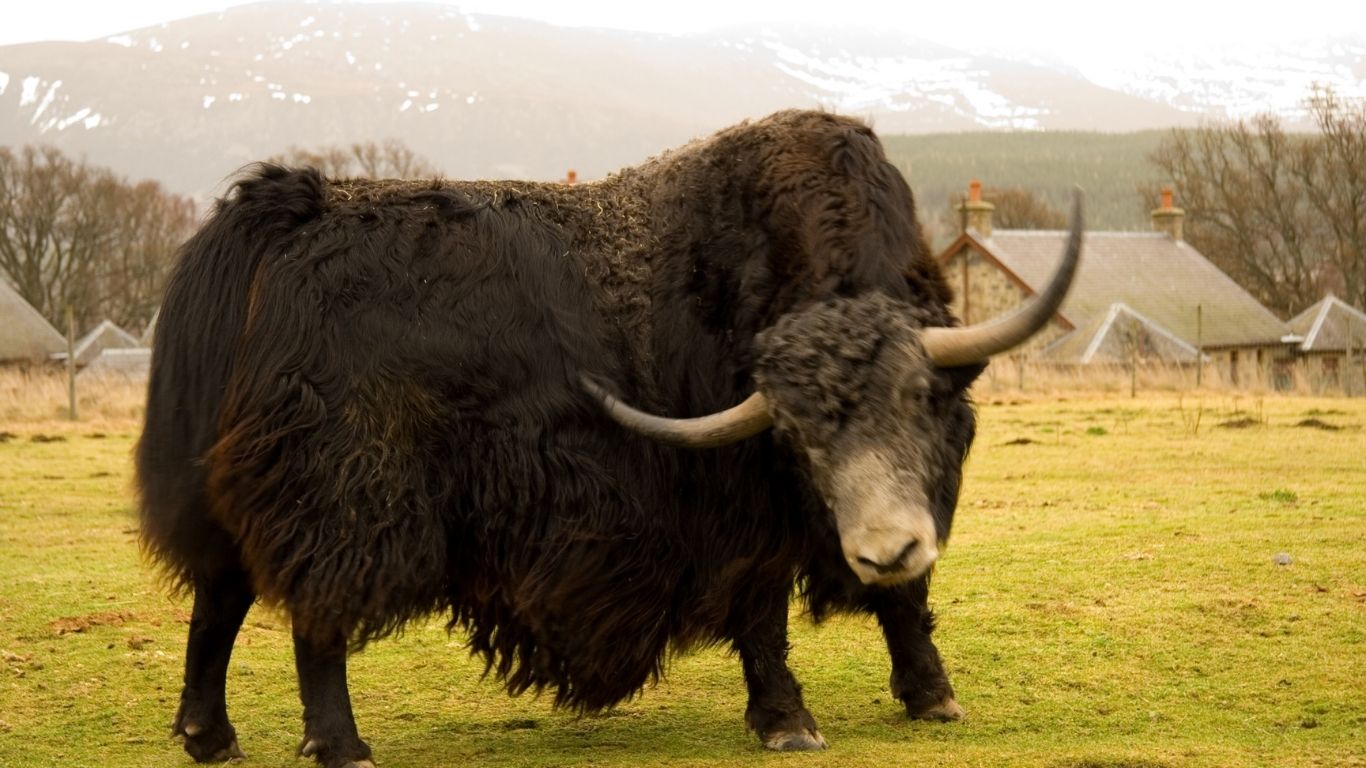
There are festivals that delight the senses fire, dance, color, and music. And then there are festivals that genuinely stop you in your tracks, which make you reconsider everything you thought you knew about the relationship between people, animals, medicine, and the mountains they call home. The Yak Blood Drinking Festival of Nepal's Mustang region is firmly in the second category.
For the intrepid traveler, the kind who seeks genuine cultural immersion over sanitized tourist experiences, this ancient ritual offers one of the most unforgettable windows into Himalayan life you will ever find.
What Is the Yak Blood Drinking Festival?
Practiced primarily by the Thakali people of the Mustang district as well as communities in Myagdi and Manang, this extraordinary ceremony takes place twice a year, once during the spring month of Baishakh and again during the monsoon month of Shrawan. The timing is no coincidence.
During these seasons, yaks roam the high-altitude pastures of the Himalayas, feasting on a remarkable array of wild medicinal herbs: the prized yarsagumba (caterpillar fungus), Panchaunle orchid, Jatamasi root, and dozens of other plants that have formed the backbone of Himalayan medicine for centuries. The local belief one that is hard to dismiss when you consider the depth of indigenous knowledge in this region is that these medicinal properties transfer directly into the yak's blood.
The Ritual Itself
The ceremony is carried out by a skilled practitioner known as the aamji, a traditional healer who has studied the art for years. With precision and care, the aamji makes a careful incision in the yak's jugular vein and collects the warm, fresh blood into cups, which are then distributed to participants.
Crucially, the yak is not harmed in any permanent way. The wound is treated and the animal is released to continue grazing. This is not a slaughter ritual, it is something far more nuanced, rooted in centuries of careful coexistence between highland people and the animals they depend on.
There is also a fascinating Buddhist dimension to the practice. The communities of Mustang are deeply Buddhist, and Buddhist doctrine does not permit the killing of animals. Yet the same doctrine allows the consumption of an animal that has died by accident or by natural causes. Over generations, the tradition of blood-drawing, stopping short of slaughter ,became a spiritually and ethically sanctioned way to benefit from the yak's medicinal properties. It is a striking example of religious principle shaping everyday cultural practice.
What Do People Believe It Cures?
Ask the locals and the list is impressively specific: gastritis, jaundice, muscle sprains, skin diseases, and a range of ailments associated with life in the cold, high-altitude environment. Whether you are a believer in traditional medicine or a skeptic, there is no denying that these communities have thrived for generations in one of the world's harshest environments, and that their knowledge of local plants and their properties is deep, real, and largely undocumented by modern science.
Where and When to Witness It
The festival is concentrated in the Mustang district of northwestern Nepal, an ancient, semi-arid kingdom with stark landscapes, medieval walled villages, and a culture that owes as much to Tibet as it does to the rest of Nepal. Upper Mustang, in particular, is one of the last places on earth where Tibetan Buddhist culture has been preserved virtually intact.
The spring occurrence falls roughly in April-May, the monsoon occurrence in July-August. Both are spectacular times to visit Mustang: spring brings wildflowers and clear skies to the high passes, while the monsoon season, though wet at lower elevations leaves Mustang's rain-shadow landscape surprisingly dry and dramatic.
Experience the Extraordinary
This is not the Nepal of crowded Everest base camps and well-worn trekking routes. This is the Nepal that most visitors never see ancient, spiritual, and utterly alive with tradition. Our tailor-made Mustang expeditions are designed to place you inside these experiences, not just in front of them.
ADVENTURE OUTDOOR
